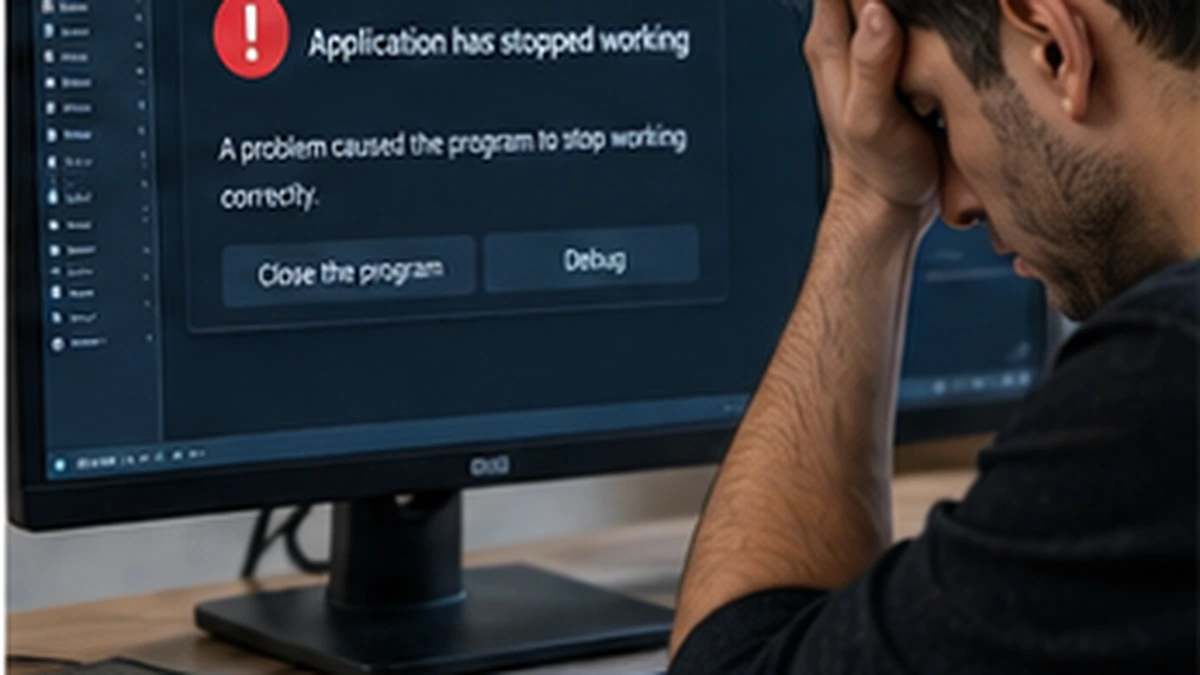
Troubleshoot app crashes is easier to manage when software decisions are treated as part of system maintenance rather than as one-click installation. Programs interact with operating systems, files, accounts, permissions, hardware, updates, and other software, so one small change can affect stability, privacy, and compatibility.
This guide explains troubleshoot app crashes in practical language for everyday users. The examples are general and may differ between Windows, macOS, Linux, mobile platforms, and individual publishers, so use the official documentation for the software and operating system you actually use.
Troubleshoot app crashes by noting the exact symptom
Record whether the app fails to open, freezes, closes immediately, crashes during one task, or shows a specific error message.
For troubleshoot app crashes, apply this point to one real program on your device. Record the publisher, version, operating system, source, and the setting or file involved. This turns the idea into a repeatable software check instead of relying on memory. Section review 1.
Restart the app and then the device
A restart clears stuck processes, temporary locks, and some transient memory problems without changing data or settings.
For troubleshoot app crashes, apply this point to one real program on your device. Record the publisher, version, operating system, source, and the setting or file involved. This turns the idea into a repeatable software check instead of relying on memory. Section review 2.
Check for an app update
A known crash may already be fixed in a newer release. Use the publisher official update channel.
For troubleshoot app crashes, apply this point to one real program on your device. Record the publisher, version, operating system, source, and the setting or file involved. This turns the idea into a repeatable software check instead of relying on memory. Section review 3.
Check operating-system updates and compatibility
Applications can fail after operating-system changes or when required components are outdated.
For troubleshoot app crashes, apply this point to one real program on your device. Record the publisher, version, operating system, source, and the setting or file involved. This turns the idea into a repeatable software check instead of relying on memory. Section review 4.
Review system requirements
Low memory, insufficient storage, unsupported graphics, or the wrong processor architecture can cause instability.
For troubleshoot app crashes, apply this point to one real program on your device. Record the publisher, version, operating system, source, and the setting or file involved. This turns the idea into a repeatable software check instead of relying on memory. Section review 5.
Disable recently added plug-ins or extensions
If the problem began after adding an extension, theme, codec, plug-in, or driver, temporarily remove or disable that component.
For troubleshoot app crashes, apply this point to one real program on your device. Record the publisher, version, operating system, source, and the setting or file involved. This turns the idea into a repeatable software check instead of relying on memory. Section review 6.
Use repair or reset options where available
Microsoft supports repair or reset for some Windows apps and programs. Repair is generally less disruptive than a full reinstall.
For troubleshoot app crashes, apply this point to one real program on your device. Record the publisher, version, operating system, source, and the setting or file involved. This turns the idea into a repeatable software check instead of relying on memory. Section review 7.
Test with a clean document or new profile
A damaged project, user profile, or preference file can make the entire program appear broken.
For troubleshoot app crashes, apply this point to one real program on your device. Record the publisher, version, operating system, source, and the setting or file involved. This turns the idea into a repeatable software check instead of relying on memory. Section review 8.
Reinstall only after protecting local data
Back up projects, settings, license information, and custom files before uninstalling or resetting an application.
For troubleshoot app crashes, apply this point to one real program on your device. Record the publisher, version, operating system, source, and the setting or file involved. This turns the idea into a repeatable software check instead of relying on memory. Section review 9.
Collect logs and error details before asking for support
Version number, operating system, steps to reproduce the crash, error text, and recent changes give support teams better evidence.
For troubleshoot app crashes, apply this point to one real program on your device. Record the publisher, version, operating system, source, and the setting or file involved. This turns the idea into a repeatable software check instead of relying on memory. Section review 10.
A deeper review for troubleshoot app crashes
Think about the full software lifecycle: where the program comes from, what it needs to run, what data it creates, how it updates, how it can be recovered, and how it can be removed. A program is easier to trust and maintain when those stages are understood before something goes wrong. Software review note 9 for troubleshoot app crashes.
Also identify the dependency that would create the biggest disruption if it failed. That could be a plug-in, account login, license server, hardware driver, project file, cloud service, or old operating-system feature. For troubleshoot app crashes, protecting the most important dependency is often more useful than adding more software.
A realistic software example
A user installs or upgrades an important program and later discovers a compatibility or data problem. Instead of making random changes, the user checks the source, system requirements, version, recent updates, local data, and recovery options in order. The problem becomes easier to isolate because troubleshoot app crashes is connected to evidence rather than guesswork.
Connect this guide to the rest of the software site
Read software updates for one related software topic, and use system requirements when the second guide helps you check compatibility, safety, installation, or recovery.
These internal links connect the first Software batch so readers can move from installation and requirements to licensing, updates, troubleshooting, and safety without repeating the same article.
A seven-day practice plan for troubleshoot app crashes
Day 1: choose one important program. Day 2: record its publisher, version, license, and requirements. Day 3: identify where data and settings are stored. Day 4: review the official update and uninstall process. Day 5: verify the installer or download source. Day 6: test one backup or recovery step. Day 7: write a short checklist you could use again for another program. Software review note 9 for troubleshoot app crashes.
You do not need a full week for every program. The sequence is a framework that helps you avoid skipping safety, compatibility, or recovery just because installation appears simple.
Practical checklist
- Purpose of troubleshoot app crashes identified
- Publisher and download source verified
- System requirements checked
- Permissions and dependencies reviewed
- Important files or settings backed up
- Update and uninstall path understood
- License or subscription terms recorded
- Recovery or rollback option considered
Use the checklist to find the weakest part of your understanding of troubleshoot app crashes. One missing backup, unsupported plug-in, or unverified installer can matter more than several settings you already understand.
Frequently Asked Questions
Should I install software from any site that offers the correct filename?
No. Prefer the official publisher, trusted app store, or known repository. A correct-looking filename does not prove the package has not been modified.
Do updates always make software safer?
Updates often fix security and compatibility problems, but important workflows should still be backed up and tested because major releases can change features or plug-in support.
Does uninstalling software remove all my data?
Not always. Documents, profiles, subscriptions, cloud data, and settings can remain. Check the publisher removal documentation when complete cleanup matters.
Where should I verify software information?
Use the publisher, operating-system vendor, open-source project, or another authoritative source. Generic download pages should not replace official requirements or security guidance.
Practical review 1 for troubleshoot app crashes
Open the software official documentation and compare it with what is actually installed on your device. Confirm version number, operating-system support, update channel, license status, and where user data is stored. If one detail is uncertain, resolve it before making a major change. Software review note 38 for troubleshoot app crashes.
Then write one failure scenario for troubleshoot app crashes and the recovery step you would use. A useful software plan should answer not only how to install or use the program, but how to recover files, settings, or a working version when something fails. Software review note 1 for troubleshoot app crashes.
Practical review 2 for troubleshoot app crashes
Open the software official documentation and compare it with what is actually installed on your device. Confirm version number, operating-system support, update channel, license status, and where user data is stored. If one detail is uncertain, resolve it before making a major change. Software review note 39 for troubleshoot app crashes.
Then write one failure scenario for troubleshoot app crashes and the recovery step you would use. A useful software plan should answer not only how to install or use the program, but how to recover files, settings, or a working version when something fails. Software review note 2 for troubleshoot app crashes.
Practical review 3 for troubleshoot app crashes
Open the software official documentation and compare it with what is actually installed on your device. Confirm version number, operating-system support, update channel, license status, and where user data is stored. If one detail is uncertain, resolve it before making a major change. Software review note 40 for troubleshoot app crashes.
Then write one failure scenario for troubleshoot app crashes and the recovery step you would use. A useful software plan should answer not only how to install or use the program, but how to recover files, settings, or a working version when something fails. Software review note 3 for troubleshoot app crashes.
Practical review 4 for troubleshoot app crashes
Open the software official documentation and compare it with what is actually installed on your device. Confirm version number, operating-system support, update channel, license status, and where user data is stored. If one detail is uncertain, resolve it before making a major change. Software review note 41 for troubleshoot app crashes.
Then write one failure scenario for troubleshoot app crashes and the recovery step you would use. A useful software plan should answer not only how to install or use the program, but how to recover files, settings, or a working version when something fails. Software review note 4 for troubleshoot app crashes.
Practical review 5 for troubleshoot app crashes
Open the software official documentation and compare it with what is actually installed on your device. Confirm version number, operating-system support, update channel, license status, and where user data is stored. If one detail is uncertain, resolve it before making a major change. Software review note 42 for troubleshoot app crashes.
Then write one failure scenario for troubleshoot app crashes and the recovery step you would use. A useful software plan should answer not only how to install or use the program, but how to recover files, settings, or a working version when something fails. Software review note 5 for troubleshoot app crashes.
Authoritative resource to review
For an authoritative reference related to this topic, review Microsoft Support – Repair Apps and Programs in Windows. Use the source for the core principle, then follow the documentation for your exact software version and operating system.
Final perspective
Troubleshoot app crashes becomes easier when software is treated as a maintained system rather than a disposable download. Verify the source, understand compatibility, protect important data, and keep a recovery path. Those habits reduce both security risk and wasted troubleshooting time.
Leave a Reply