Category: Software Safety

Software safety guidance for trusted downloads, publisher verification, permissions, signatures, and safer installation decisions.

  • How to Verify a Software Download Before You Run It

    How to Verify a Software Download Before You Run It

    Verify a software download is easier to manage when software decisions are treated as part of system maintenance rather than as one-click installation. Programs interact with operating systems, files, accounts, permissions, hardware, updates, and other software, so one small change can affect stability, privacy, and compatibility.

    This guide explains verify a software download in practical language for everyday users. The examples are general and may differ between Windows, macOS, Linux, mobile platforms, and individual publishers, so use the official documentation for the software and operating system you actually use.

    Verify a software download by checking the source first

    The strongest first check is whether the file came from the official publisher, trusted store, or known package repository.

    For verify a software download, apply this point to one real program on your device. Record the publisher, version, operating system, source, and the setting or file involved. This turns the idea into a repeatable software check instead of relying on memory. Section review 1.

    Compare the domain carefully

    Attackers can register look-alike domains or use advertising to promote fake download pages. Check spelling and navigate from the publisher main site where possible.

    For verify a software download, apply this point to one real program on your device. Record the publisher, version, operating system, source, and the setting or file involved. This turns the idea into a repeatable software check instead of relying on memory. Section review 2.

    Digital signatures can identify signed Windows files

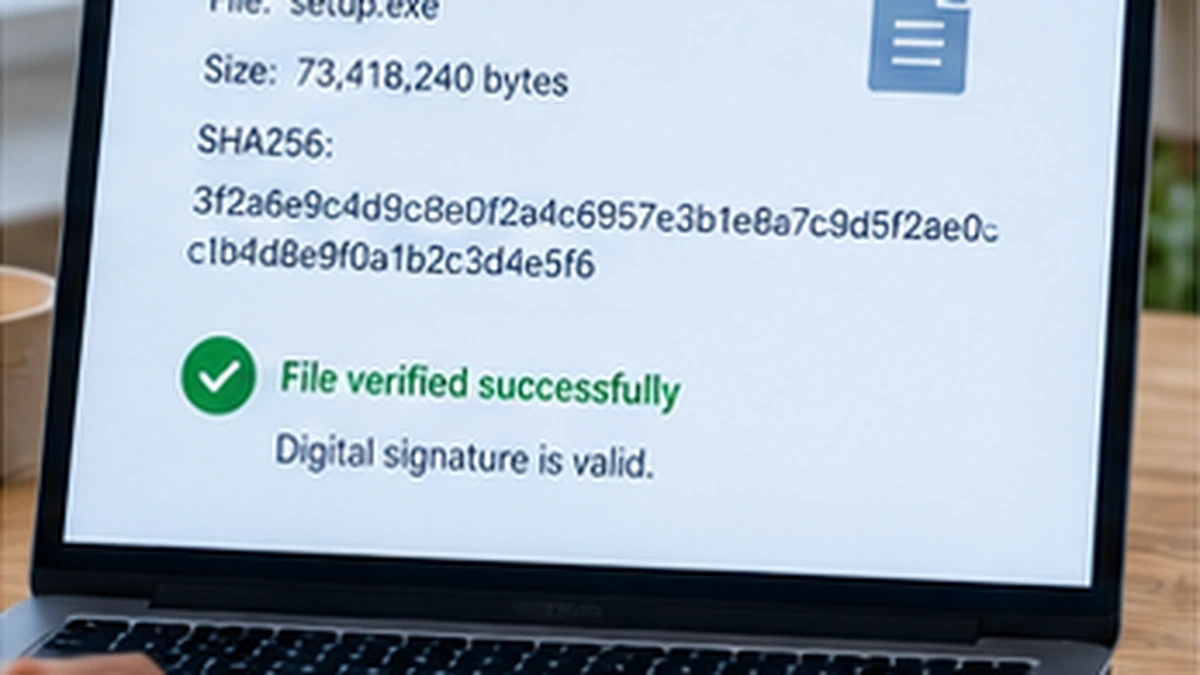
    Microsoft documents Authenticode signatures as a way to obtain information about the signer of a file and whether the signature is valid.

    For verify a software download, apply this point to one real program on your device. Record the publisher, version, operating system, source, and the setting or file involved. This turns the idea into a repeatable software check instead of relying on memory. Section review 3.

    A valid signature does not make every program trustworthy

    A digital signature helps verify publisher identity and file integrity, but users should still evaluate the publisher and program behavior.

    For verify a software download, apply this point to one real program on your device. Record the publisher, version, operating system, source, and the setting or file involved. This turns the idea into a repeatable software check instead of relying on memory. Section review 4.

    Checksums can detect changed files

    When a publisher provides a SHA-256 hash, calculate the hash locally and compare the values exactly.

    For verify a software download, apply this point to one real program on your device. Record the publisher, version, operating system, source, and the setting or file involved. This turns the idea into a repeatable software check instead of relying on memory. Section review 5.

    File size and version provide extra clues

    A dramatically different size, unexpected filename, or old version can indicate that the wrong package was downloaded.

    For verify a software download, apply this point to one real program on your device. Record the publisher, version, operating system, source, and the setting or file involved. This turns the idea into a repeatable software check instead of relying on memory. Section review 6.

    Scan suspicious downloads before execution

    Operating-system security tools and reputable security products can inspect downloads. Do not disable warnings simply to make installation easier.

    For verify a software download, apply this point to one real program on your device. Record the publisher, version, operating system, source, and the setting or file involved. This turns the idea into a repeatable software check instead of relying on memory. Section review 7.

    Watch for unexpected administrator requests

    An installer that demands elevated privileges for a simple task deserves review. The request should match the program function.

    For verify a software download, apply this point to one real program on your device. Record the publisher, version, operating system, source, and the setting or file involved. This turns the idea into a repeatable software check instead of relying on memory. Section review 8.

    Preserve verification information for important deployments

    Organizations can record the version, source URL, checksum, signature status, and date for software deployed to many devices.

    For verify a software download, apply this point to one real program on your device. Record the publisher, version, operating system, source, and the setting or file involved. This turns the idea into a repeatable software check instead of relying on memory. Section review 9.

    Do not run the file when verification fails

    If the signature, hash, publisher, or source does not match expectations, delete the file and obtain a fresh copy from the official source.

    For verify a software download, apply this point to one real program on your device. Record the publisher, version, operating system, source, and the setting or file involved. This turns the idea into a repeatable software check instead of relying on memory. Section review 10.

    A deeper review for verify a software download

    Think about the full software lifecycle: where the program comes from, what it needs to run, what data it creates, how it updates, how it can be recovered, and how it can be removed. A program is easier to trust and maintain when those stages are understood before something goes wrong. Software review note 7 for verify a software download.

    Also identify the dependency that would create the biggest disruption if it failed. That could be a plug-in, account login, license server, hardware driver, project file, cloud service, or old operating-system feature. For verify a software download, protecting the most important dependency is often more useful than adding more software.

    A realistic software example

    A user installs or upgrades an important program and later discovers a compatibility or data problem. Instead of making random changes, the user checks the source, system requirements, version, recent updates, local data, and recovery options in order. The problem becomes easier to isolate because verify a software download is connected to evidence rather than guesswork.

    Connect this guide to the rest of the software site

    Read choose software safely for one related software topic, and use update software safely when the second guide helps you check compatibility, safety, installation, or recovery.

    These internal links connect the first Software batch so readers can move from installation and requirements to licensing, updates, troubleshooting, and safety without repeating the same article.

    A seven-day practice plan for verify a software download

    Day 1: choose one important program. Day 2: record its publisher, version, license, and requirements. Day 3: identify where data and settings are stored. Day 4: review the official update and uninstall process. Day 5: verify the installer or download source. Day 6: test one backup or recovery step. Day 7: write a short checklist you could use again for another program. Software review note 7 for verify a software download.

    You do not need a full week for every program. The sequence is a framework that helps you avoid skipping safety, compatibility, or recovery just because installation appears simple.

    Practical checklist

    • Purpose of verify a software download identified
    • Publisher and download source verified
    • System requirements checked
    • Permissions and dependencies reviewed
    • Important files or settings backed up
    • Update and uninstall path understood
    • License or subscription terms recorded
    • Recovery or rollback option considered

    Use the checklist to find the weakest part of your understanding of verify a software download. One missing backup, unsupported plug-in, or unverified installer can matter more than several settings you already understand.

    Frequently Asked Questions

    Should I install software from any site that offers the correct filename?

    No. Prefer the official publisher, trusted app store, or known repository. A correct-looking filename does not prove the package has not been modified.

    Do updates always make software safer?

    Updates often fix security and compatibility problems, but important workflows should still be backed up and tested because major releases can change features or plug-in support.

    Does uninstalling software remove all my data?

    Not always. Documents, profiles, subscriptions, cloud data, and settings can remain. Check the publisher removal documentation when complete cleanup matters.

    Where should I verify software information?

    Use the publisher, operating-system vendor, open-source project, or another authoritative source. Generic download pages should not replace official requirements or security guidance.

    Practical review 1 for verify a software download

    Open the software official documentation and compare it with what is actually installed on your device. Confirm version number, operating-system support, update channel, license status, and where user data is stored. If one detail is uncertain, resolve it before making a major change. Software review note 29 for verify a software download.

    Then write one failure scenario for verify a software download and the recovery step you would use. A useful software plan should answer not only how to install or use the program, but how to recover files, settings, or a working version when something fails. Software review note 1 for verify a software download.

    Practical review 2 for verify a software download

    Open the software official documentation and compare it with what is actually installed on your device. Confirm version number, operating-system support, update channel, license status, and where user data is stored. If one detail is uncertain, resolve it before making a major change. Software review note 30 for verify a software download.

    Then write one failure scenario for verify a software download and the recovery step you would use. A useful software plan should answer not only how to install or use the program, but how to recover files, settings, or a working version when something fails. Software review note 2 for verify a software download.

    Practical review 3 for verify a software download

    Open the software official documentation and compare it with what is actually installed on your device. Confirm version number, operating-system support, update channel, license status, and where user data is stored. If one detail is uncertain, resolve it before making a major change. Software review note 31 for verify a software download.

    Then write one failure scenario for verify a software download and the recovery step you would use. A useful software plan should answer not only how to install or use the program, but how to recover files, settings, or a working version when something fails. Software review note 3 for verify a software download.

    Practical review 4 for verify a software download

    Open the software official documentation and compare it with what is actually installed on your device. Confirm version number, operating-system support, update channel, license status, and where user data is stored. If one detail is uncertain, resolve it before making a major change. Software review note 32 for verify a software download.

    Then write one failure scenario for verify a software download and the recovery step you would use. A useful software plan should answer not only how to install or use the program, but how to recover files, settings, or a working version when something fails. Software review note 4 for verify a software download.

    Practical review 5 for verify a software download

    Open the software official documentation and compare it with what is actually installed on your device. Confirm version number, operating-system support, update channel, license status, and where user data is stored. If one detail is uncertain, resolve it before making a major change. Software review note 33 for verify a software download.

    Then write one failure scenario for verify a software download and the recovery step you would use. A useful software plan should answer not only how to install or use the program, but how to recover files, settings, or a working version when something fails. Software review note 5 for verify a software download.

    Authoritative resource to review

    For an authoritative reference related to this topic, review Microsoft Learn – Get-AuthenticodeSignature. Use the source for the core principle, then follow the documentation for your exact software version and operating system.

    Final perspective

    Verify a software download becomes easier when software is treated as a maintained system rather than a disposable download. Verify the source, understand compatibility, protect important data, and keep a recovery path. Those habits reduce both security risk and wasted troubleshooting time.
  • How to Choose Software Safely Before You Install It

    How to Choose Software Safely Before You Install It

    Choose software safely is easier to manage when software decisions are treated as part of system maintenance rather than as one-click installation. Programs interact with operating systems, files, accounts, permissions, hardware, updates, and other software, so one small change can affect stability, privacy, and compatibility.

    This guide explains choose software safely in practical language for everyday users. The examples are general and may differ between Windows, macOS, Linux, mobile platforms, and individual publishers, so use the official documentation for the software and operating system you actually use.

    Choose software safely by starting with the real task

    Define what you need the program to do before searching. A clear task helps you reject software that adds features, permissions, subscriptions, or complexity you do not need.

    For choose software safely, apply this point to one real program on your device. Record the publisher, version, operating system, source, and the setting or file involved. This turns the idea into a repeatable software check instead of relying on memory. Section review 1.

    Prefer the official publisher or trusted app store

    Download from the software publisher, operating-system store, or another trusted source. Third-party download portals can bundle installers, outdated versions, advertising software, or modified packages.

    For choose software safely, apply this point to one real program on your device. Record the publisher, version, operating system, source, and the setting or file involved. This turns the idea into a repeatable software check instead of relying on memory. Section review 2.

    Check who publishes the software

    Look for a clear company or project identity, support page, privacy information, documentation, and a consistent domain. An installer with no traceable publisher deserves more caution.

    For choose software safely, apply this point to one real program on your device. Record the publisher, version, operating system, source, and the setting or file involved. This turns the idea into a repeatable software check instead of relying on memory. Section review 3.

    Review permissions and access

    Some software needs access to files, camera, microphone, contacts, browser data, system services, or administrator privileges. Compare requested access with the program function.

    For choose software safely, apply this point to one real program on your device. Record the publisher, version, operating system, source, and the setting or file involved. This turns the idea into a repeatable software check instead of relying on memory. Section review 4.

    Read independent information carefully

    Look for recurring reports about stability, unwanted behavior, subscriptions, difficult removal, or misleading pricing. Repeated patterns are more useful than one extreme review.

    For choose software safely, apply this point to one real program on your device. Record the publisher, version, operating system, source, and the setting or file involved. This turns the idea into a repeatable software check instead of relying on memory. Section review 5.

    Check update and support history

    Software that receives security and compatibility updates is easier to maintain than abandoned software. Review recent release notes when the program will handle important files.

    For choose software safely, apply this point to one real program on your device. Record the publisher, version, operating system, source, and the setting or file involved. This turns the idea into a repeatable software check instead of relying on memory. Section review 6.

    Understand the price and subscription model

    Free trials, freemium plans, recurring subscriptions, and one-time licenses create different long-term costs. Confirm what happens after the trial and how cancellation works.

    For choose software safely, apply this point to one real program on your device. Record the publisher, version, operating system, source, and the setting or file involved. This turns the idea into a repeatable software check instead of relying on memory. Section review 7.

    Check compatibility before installing

    The publisher should state supported operating systems, processor architecture, storage, RAM, and other requirements. Unsupported software may install but still fail later.

    For choose software safely, apply this point to one real program on your device. Record the publisher, version, operating system, source, and the setting or file involved. This turns the idea into a repeatable software check instead of relying on memory. Section review 8.

    Create a recovery path for high-impact changes

    Before installing software that adds drivers, security tools, or deep system integrations, back up important files and know how to remove or roll back the change.

    For choose software safely, apply this point to one real program on your device. Record the publisher, version, operating system, source, and the setting or file involved. This turns the idea into a repeatable software check instead of relying on memory. Section review 9.

    Install one major change at a time

    When several programs are installed together, troubleshooting becomes harder. Install and test one important program before making another large system change.

    For choose software safely, apply this point to one real program on your device. Record the publisher, version, operating system, source, and the setting or file involved. This turns the idea into a repeatable software check instead of relying on memory. Section review 10.

    A deeper review for choose software safely

    Think about the full software lifecycle: where the program comes from, what it needs to run, what data it creates, how it updates, how it can be recovered, and how it can be removed. A program is easier to trust and maintain when those stages are understood before something goes wrong. Software review note 1 for choose software safely.

    Also identify the dependency that would create the biggest disruption if it failed. That could be a plug-in, account login, license server, hardware driver, project file, cloud service, or old operating-system feature. For choose software safely, protecting the most important dependency is often more useful than adding more software.

    A realistic software example

    A user installs or upgrades an important program and later discovers a compatibility or data problem. Instead of making random changes, the user checks the source, system requirements, version, recent updates, local data, and recovery options in order. The problem becomes easier to isolate because choose software safely is connected to evidence rather than guesswork.

    Connect this guide to the rest of the software site

    Read software system requirements for one related software topic, and use verify a software download when the second guide helps you check compatibility, safety, installation, or recovery.

    These internal links connect the first Software batch so readers can move from installation and requirements to licensing, updates, troubleshooting, and safety without repeating the same article.

    A seven-day practice plan for choose software safely

    Day 1: choose one important program. Day 2: record its publisher, version, license, and requirements. Day 3: identify where data and settings are stored. Day 4: review the official update and uninstall process. Day 5: verify the installer or download source. Day 6: test one backup or recovery step. Day 7: write a short checklist you could use again for another program. Software review note 1 for choose software safely.

    You do not need a full week for every program. The sequence is a framework that helps you avoid skipping safety, compatibility, or recovery just because installation appears simple.

    Practical checklist

    • Purpose of choose software safely identified
    • Publisher and download source verified
    • System requirements checked
    • Permissions and dependencies reviewed
    • Important files or settings backed up
    • Update and uninstall path understood
    • License or subscription terms recorded
    • Recovery or rollback option considered

    Use the checklist to find the weakest part of your understanding of choose software safely. One missing backup, unsupported plug-in, or unverified installer can matter more than several settings you already understand.

    Frequently Asked Questions

    Should I install software from any site that offers the correct filename?

    No. Prefer the official publisher, trusted app store, or known repository. A correct-looking filename does not prove the package has not been modified.

    Do updates always make software safer?

    Updates often fix security and compatibility problems, but important workflows should still be backed up and tested because major releases can change features or plug-in support.

    Does uninstalling software remove all my data?

    Not always. Documents, profiles, subscriptions, cloud data, and settings can remain. Check the publisher removal documentation when complete cleanup matters.

    Where should I verify software information?

    Use the publisher, operating-system vendor, open-source project, or another authoritative source. Generic download pages should not replace official requirements or security guidance.

    Practical review 1 for choose software safely

    Open the software official documentation and compare it with what is actually installed on your device. Confirm version number, operating-system support, update channel, license status, and where user data is stored. If one detail is uncertain, resolve it before making a major change. Software review note 1 for choose software safely.

    Then write one failure scenario for choose software safely and the recovery step you would use. A useful software plan should answer not only how to install or use the program, but how to recover files, settings, or a working version when something fails. Software review note 1 for choose software safely.

    Practical review 2 for choose software safely

    Open the software official documentation and compare it with what is actually installed on your device. Confirm version number, operating-system support, update channel, license status, and where user data is stored. If one detail is uncertain, resolve it before making a major change. Software review note 2 for choose software safely.

    Then write one failure scenario for choose software safely and the recovery step you would use. A useful software plan should answer not only how to install or use the program, but how to recover files, settings, or a working version when something fails. Software review note 2 for choose software safely.

    Practical review 3 for choose software safely

    Open the software official documentation and compare it with what is actually installed on your device. Confirm version number, operating-system support, update channel, license status, and where user data is stored. If one detail is uncertain, resolve it before making a major change. Software review note 3 for choose software safely.

    Then write one failure scenario for choose software safely and the recovery step you would use. A useful software plan should answer not only how to install or use the program, but how to recover files, settings, or a working version when something fails. Software review note 3 for choose software safely.

    Practical review 4 for choose software safely

    Open the software official documentation and compare it with what is actually installed on your device. Confirm version number, operating-system support, update channel, license status, and where user data is stored. If one detail is uncertain, resolve it before making a major change. Software review note 4 for choose software safely.

    Then write one failure scenario for choose software safely and the recovery step you would use. A useful software plan should answer not only how to install or use the program, but how to recover files, settings, or a working version when something fails. Software review note 4 for choose software safely.

    Authoritative resource to review

    For an authoritative reference related to this topic, review Microsoft Support – Protect Your PC From Unwanted Software. Use the source for the core principle, then follow the documentation for your exact software version and operating system.

    Final perspective

    Choose software safely becomes easier when software is treated as a maintained system rather than a disposable download. Verify the source, understand compatibility, protect important data, and keep a recovery path. Those habits reduce both security risk and wasted troubleshooting time.